Education hub
Understand Your Spine
Free, sourced guides to the conditions behind most neck and back pain and the treatments used for them. Every guide covers the same ground: what it actually is, the symptoms that point to it, the warning signs that mean you should be seen urgently, and what treatment usually involves.
Start here
Where does it hurt?
Most people know roughly where their pain lives long before anyone gives it a name. Pick the part of the spine that matches, and start from the guides for that level.
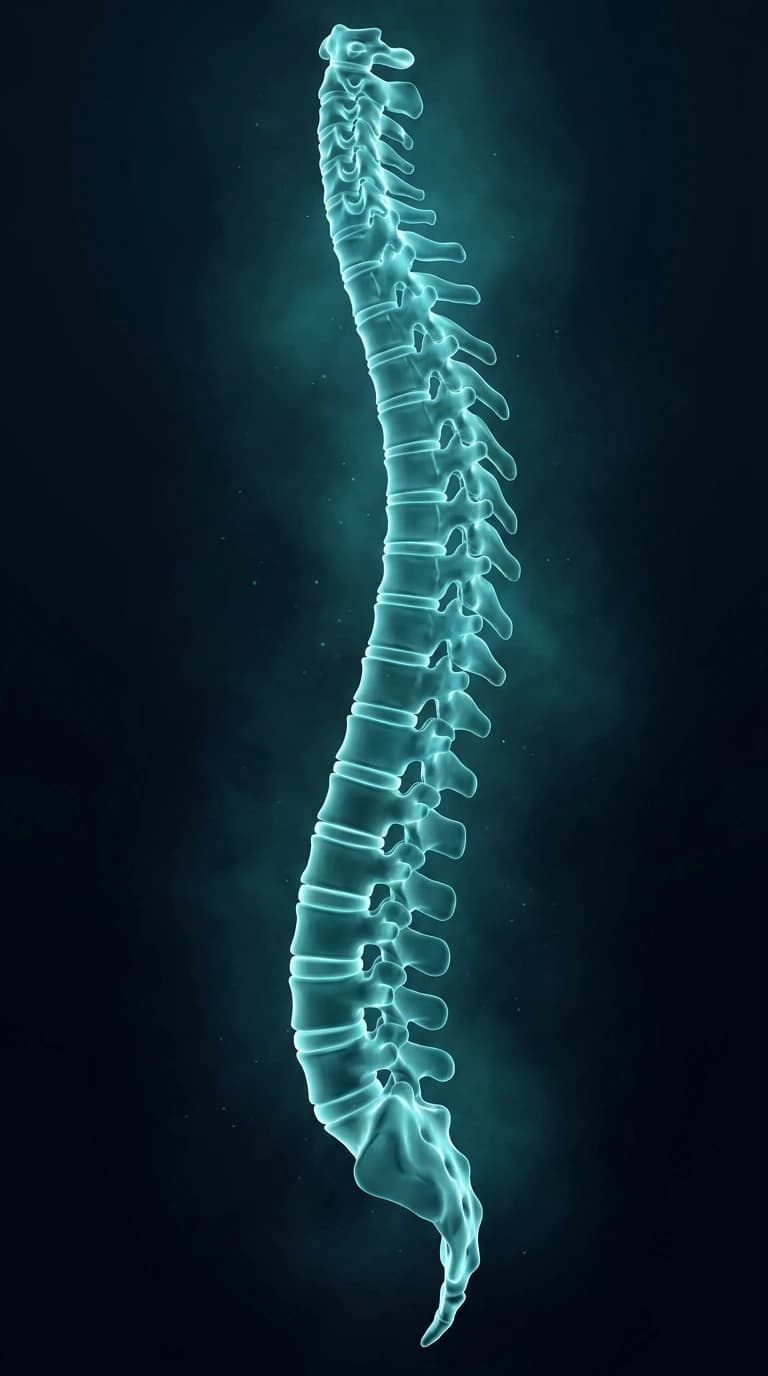
- NeckSeven vertebrae carrying the weight of your head. Trouble here often surfaces as shoulder, arm or hand symptoms.10guides
- Mid-backBraced by the ribs, so it is the stiffest stretch of spine and disc problems are less common.5guides
- Lower backCarries most of your body weight and does most of your bending. Sciatica almost always starts here.15guides
- Pelvis & tailboneThe base of the spine, wedged between the pelvic bones. Routinely mistaken for ordinary low back pain.1guide
Other ways into the guides
Start from what you feel
Leg pain that eases when you sit. Numb hands. Pain that only comes on when you walk. Each symptom page sets out the conditions that produce it — including the ones that are not coming from your spine at all.
Browse by symptomLook up a name you were given
If a clinician has already named it — stenosis, spondylolisthesis, myelopathy — go straight to that guide. Every condition and procedure in the library is listed alphabetically at the foot of this page.
Jump to the full indexTreatments
What the treatments actually do
Grouped by what the treatment does rather than where on the spine it happens — the choice in front of most people is "fusion or decompression", or "is an injection worth trying first". 28 guides across 8 kinds of treatment.
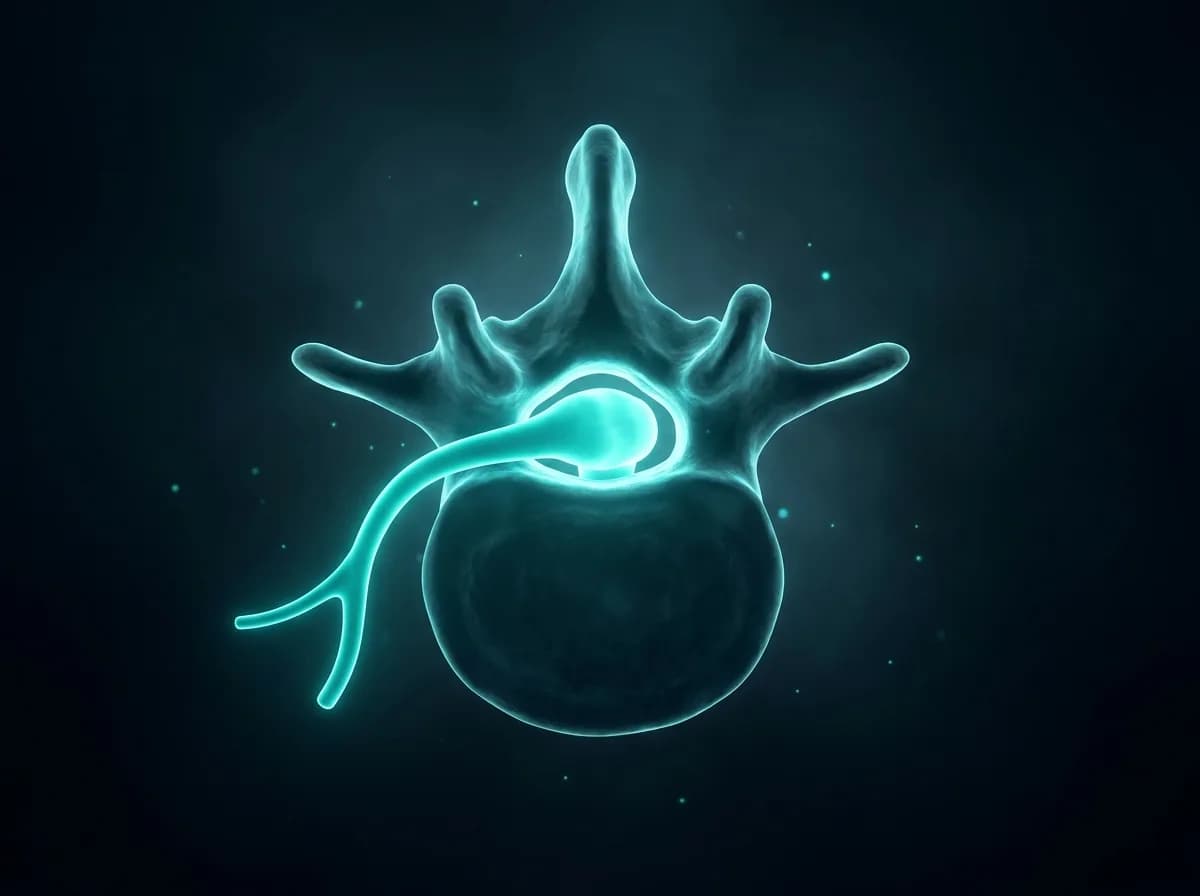
Decompression
Taking pressure off a squeezed nerve or spinal cord by removing the disc, bone or ligament pressing on it — without fusing anything.
See all 8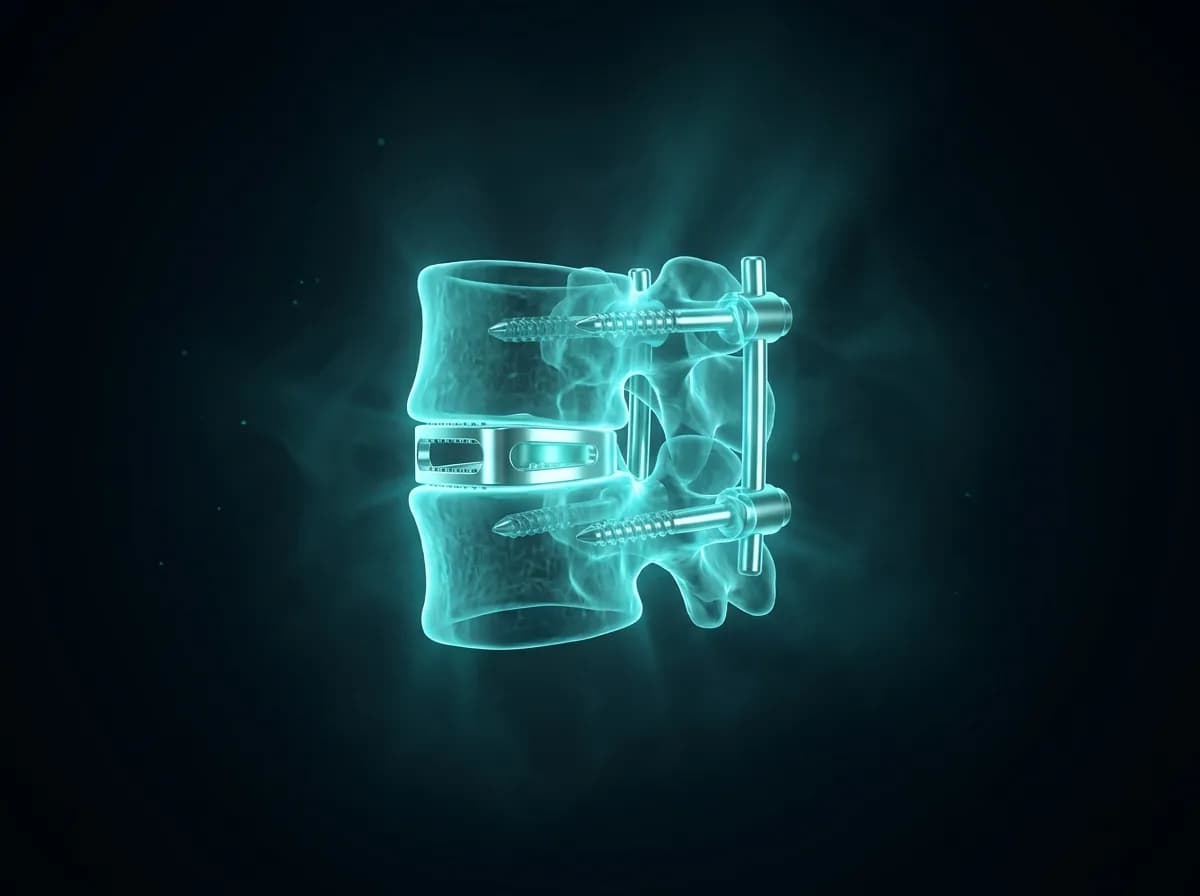
Fusion
Joining two or more vertebrae into one solid segment, used when a level is unstable, slipped, or painful with movement.
See all 7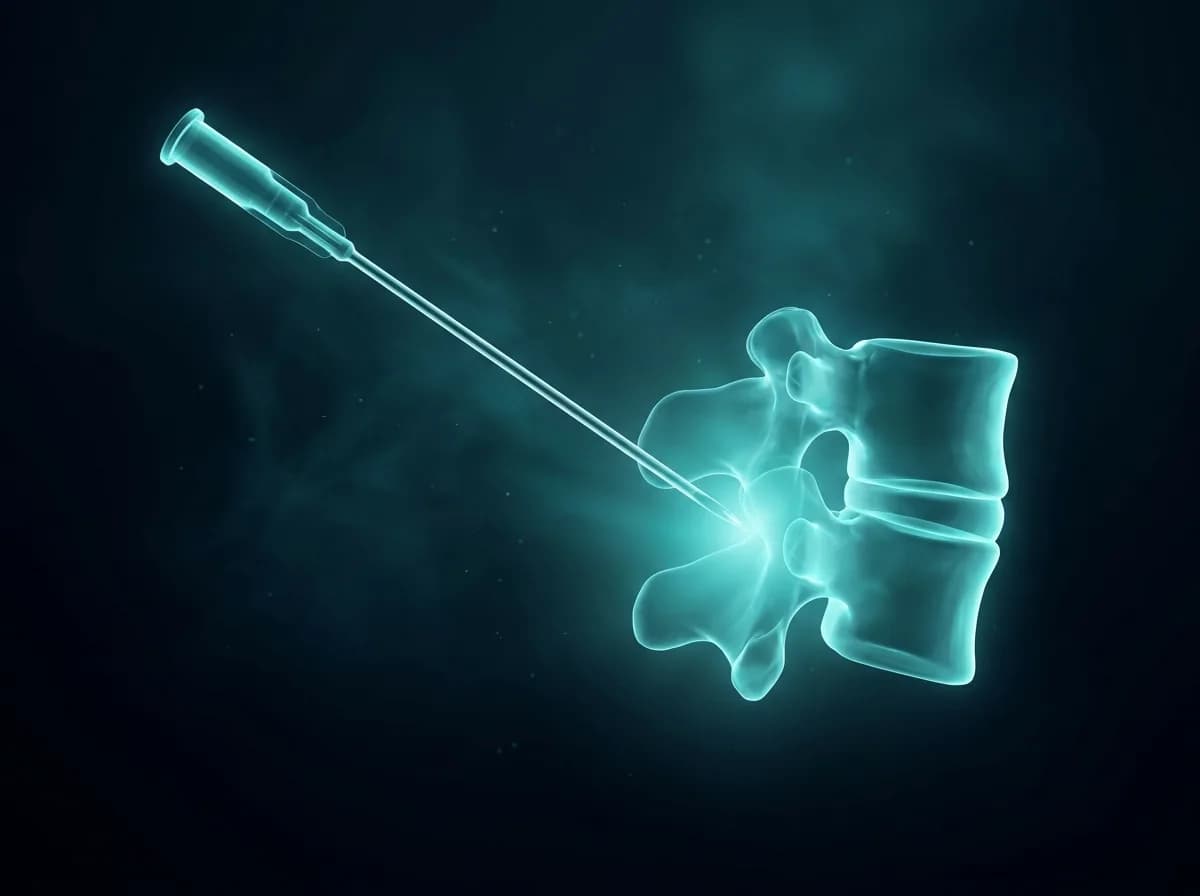
Injections
Image-guided injections that both relieve pain and help work out which structure is actually generating it.
See all 6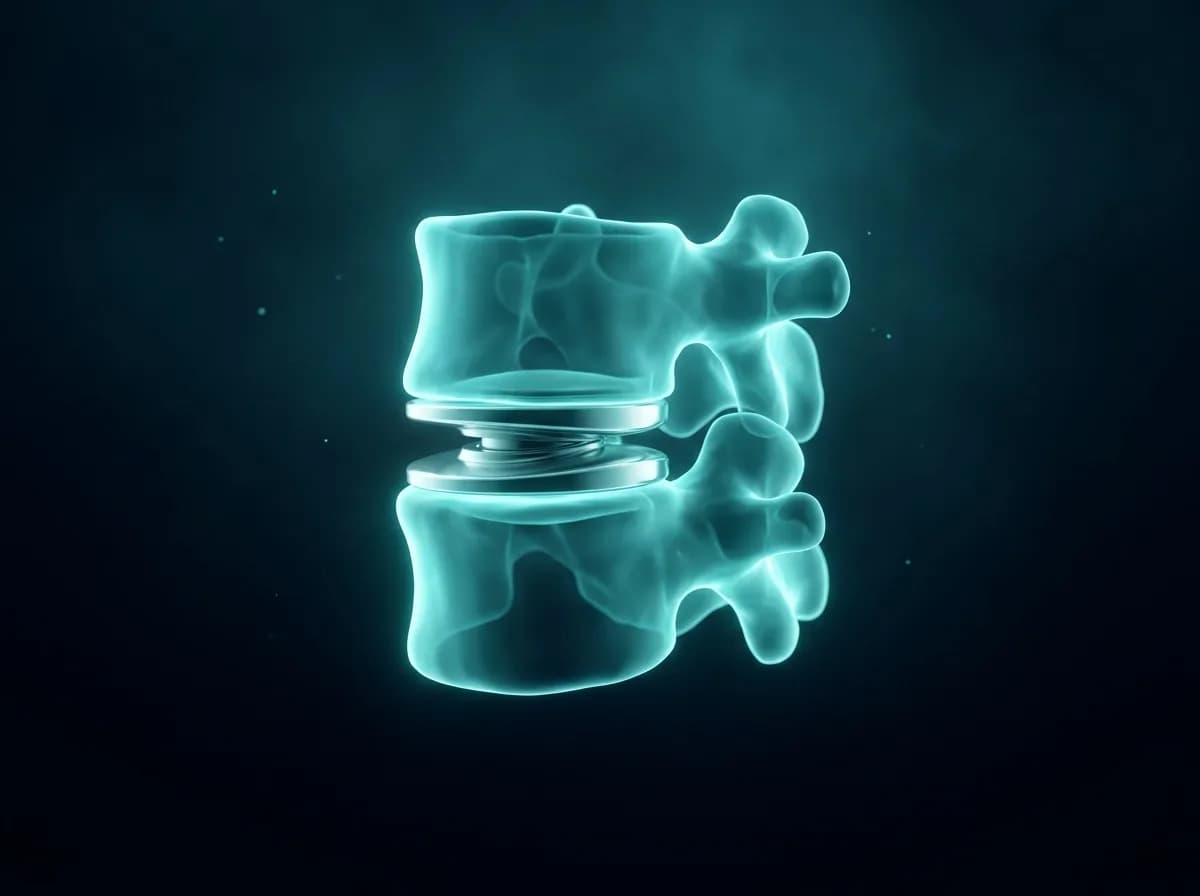
Disc replacement
Replacing a worn disc with an artificial one, keeping motion at that level instead of fusing it.
See all 2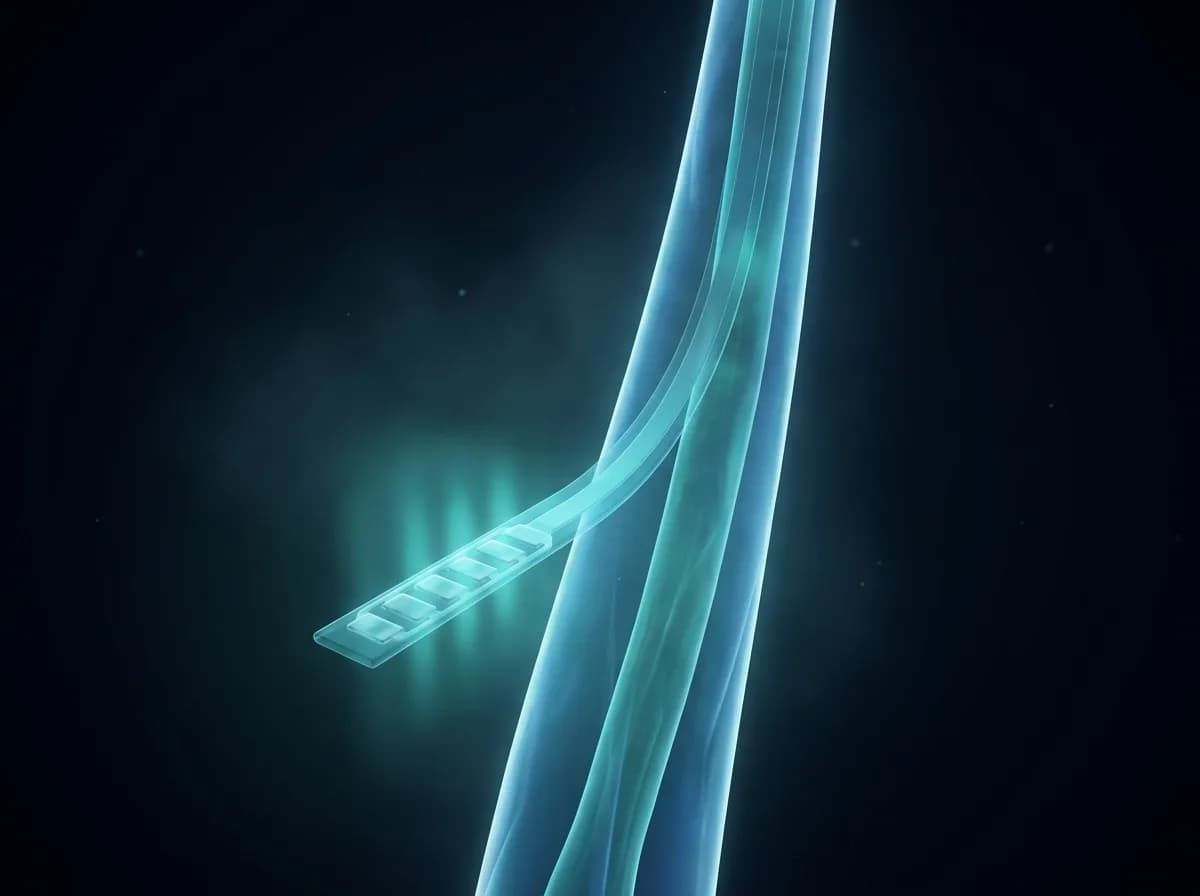
Neuromodulation
Implanted devices that change how pain signals reach the brain, for chronic pain that has not responded to surgery or medication.
See all 2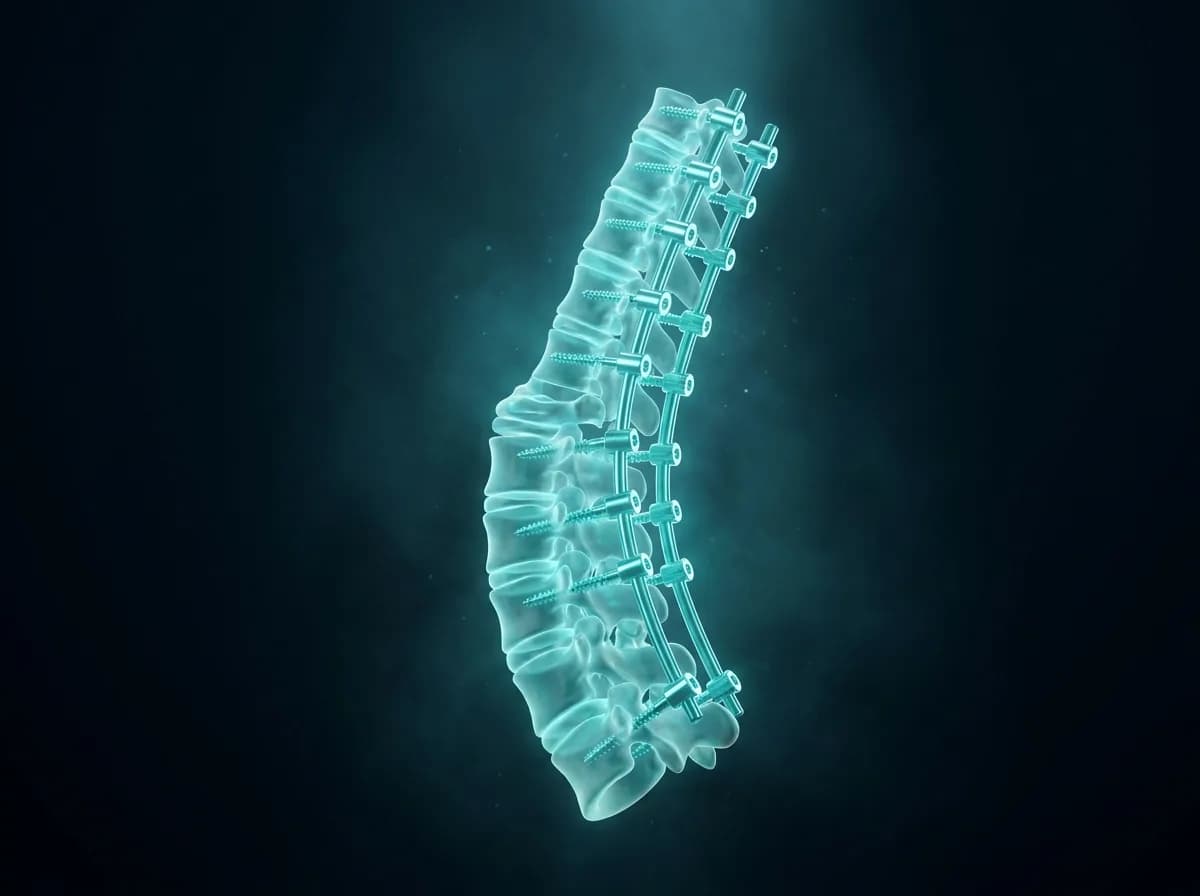
Deformity correction
Larger reconstructive operations that realign a spine which has curved or tilted out of balance.
See the guide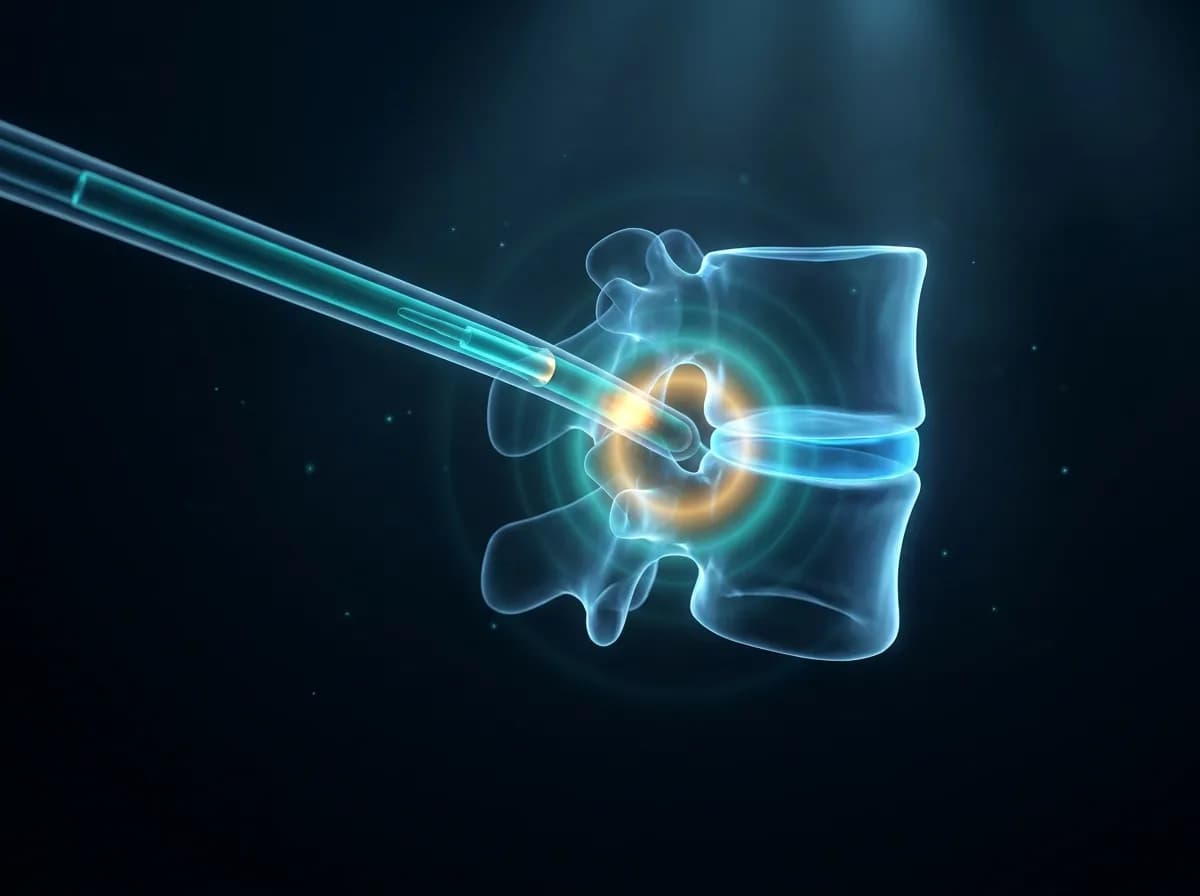
Nerve ablation
Using heat to interrupt the small nerves that carry pain from an arthritic facet joint, for relief that lasts months at a time.
See the guide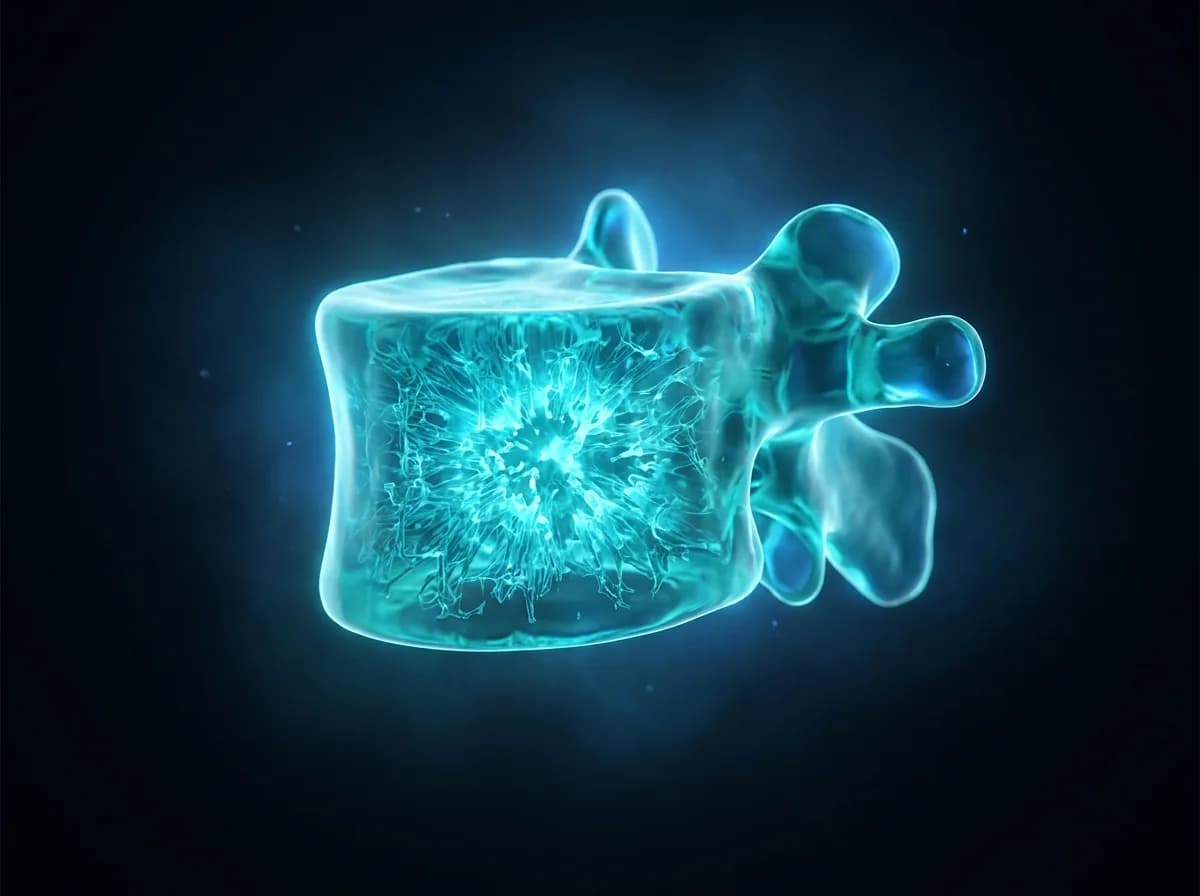
Vertebral augmentation
Stabilising a fractured vertebra from the inside with bone cement, most often after an osteoporotic compression fracture.
See the guideEverything in the library
The full index
All 82 guides, A to Z. If you already have the name, this is the fastest way to it.
Conditions54
- Acute Postoperative Spine Complications
- Adjacent Segment Disease
- Adult Degenerative Scoliosis
- Adult Spinal Deformity
- Burst Fracture
- Cage Subsidence
- Carpal and Cubital Tunnel Syndrome as a Cervical Mimic
- Cauda Equina Syndrome
- Central Cord Syndrome
- Central Sensitization as a Spine Mimic
- Cervical Disc Herniation
- Cervical Myelopathy
- Cervical Myeloradiculopathy
- Cervical Ossification of the Posterior Longitudinal Ligament (OPLL)
- Cervical Radiculopathy
- Cervical Stenosis
- Critical Limb Ischemia as a Spine Mimic
- Degenerative Spondylolisthesis
- Epidural Lipomatosis as a Spine Mimic
- Failed Back Surgery Syndrome
- Flatback Syndrome
- Hardware Loosening
- Hip Osteoarthritis as a Spine Mimic
- Inflammatory Spondyloarthropathy as a Spine Mimic
- Intradural Extramedullary Tumor
- Intramedullary Spinal Cord Tumor
- Isthmic Spondylolisthesis
- Lumbar Disc Herniation
- Lumbar Foraminal Stenosis
- Lumbar Lateral Recess Stenosis
- Lumbar Motor Deficit
- Lumbar Radiculopathy
- Lumbar Spinal Stenosis
- Lumbar Spinal Stenosis with Neurogenic Claudication
- Mechanical Low Back Pain
- Mechanical Neck Pain
- Metastatic Epidural Spinal Cord Compression
- Peripheral Neuropathy as a Spine Mimic
- Post-Laminectomy Syndrome
- Pseudarthrosis (Spinal Nonunion)
- Recurrent Disc Herniation
- Sagittal Imbalance
- Shoulder Pathology as a Cervical Mimic
- SI Joint Pain as a Spine Mimic
- Spinal Epidural Abscess
- Spinal Metastasis
- Thoracic Back Pain
- Thoracic Disc Herniation
- Thoracic Myelopathy
- Thoracic Radiculopathy
- Thoracic Stenosis
- Vascular Claudication as a Spine Mimic
- Vertebral Compression Fracture
- Vertebral Osteomyelitis and Discitis
Procedures & treatments28
- Anterior Cervical Discectomy and Fusion (ACDF)
- Anterior Lumbar Interbody Fusion (ALIF)
- Cervical Disc Replacement
- Cervical Laminectomy
- Corpectomy
- Endoscopic Spine Surgery
- Epidural Steroid Injection
- Facet Joint Injection
- Intrathecal Pain Pump
- Laminoplasty
- Lateral Lumbar Interbody Fusion (LLIF)
- Lumbar Disc Replacement
- Lumbar Foraminotomy
- Lumbar Laminectomy
- Medial Branch Block
- Microdiscectomy
- Posterior Cervical Foraminotomy
- Posterior Cervical Fusion
- Posterolateral Lumbar Fusion
- Radiofrequency Ablation
- Sacroiliac Joint Fusion
- Sacroiliac Joint Injection
- Selective Nerve Root Block
- Spinal Cord Stimulator
- Spinal Osteotomy
- Transforaminal Lumbar Interbody Fusion (TLIF)
- Trigger Point Injection
- Vertebral Augmentation (Kyphoplasty and Vertebroplasty)
This article is general education, not medical advice. It cannot account for your history, imaging, or examination — talk to a qualified clinician about your own care.
Still not sure where you fit?
SpineSense walks you through a structured assessment built by spine surgeons, then gives you a plain-language summary of what your symptoms and records describe and which kind of specialist usually handles it — something to take to an appointment, not a diagnosis.
Start a free assessment